PeopleSoft Consulting

ross chemistry laboratory, auburn university, alabama

PeopleSoft Consulting

PeopleSoft, now part of Oracle, is a leading enterprise resource planning (ERP) software suite widely used by universities and colleges for critical functions like student administration, finance, and human resources. However, optimizing and leveraging PeopleSoft to its full potential can be a complex task. This is where Solidan’s PeopleSoft consulting services come in.

What is PeopleSoft Consulting?

Solidan’s PeopleSoft consulting offers a range of services to help higher education institutions get the most out of their PeopleSoft investment. These services can include:

  • Implementation and Upgrade Support:
    Whether you’re a new PeopleSoft user or looking to upgrade your existing system, consultants can guide you through the entire process, ensuring a smooth transition and minimizing disruption.
  • Customization and Development:
    PeopleSoft offers a robust platform for customization. Solidan can help you tailor the software to your specific needs, develop new functionalities, and integrate it with other systems.
  • Data Migration and Analysis:
    Migrating data to PeopleSoft can be challenging. Solidan can ensure a seamless transfer of your data and help you leverage it for better decision-making.
  • Training and Change Management:
    PeopleSoft adoption requires effective user training. Your Solidan team can develop customized training programs and support change management initiatives to ensure user buy-in and maximize the software’s impact.
  • Ongoing Support:
    We provide ongoing support to address technical issues, answer user questions, and ensure the system continues to meet your evolving needs.

Benefits of PeopleSoft Consulting for Higher Education

Investing in Solidan’s PeopleSoft consulting services can offer several advantages for your institution:

  • Improved Efficiency and Productivity:
    Solidan can help you streamline processes, automate tasks, and optimize workflows, leading to increased efficiency and productivity across departments.
  • Enhanced Data Management:
    With PeopleSoft our Solidan consultants can help you establish a centralized data repository, improving data quality, accessibility, and reporting capabilities.
  • Reduced Costs:
    By optimizing PeopleSoft and eliminating inefficiencies, you can potentially reduce operational costs and free up resources for other areas.
  • Improved Decision-Making:
    PeopleSoft provides valuable insights into your institution’s operations. Solidan can help you leverage data analytics to make more informed decisions.
  • Enhanced Regulatory Compliance:
    Higher education institutions face complex compliance requirements. Our consultants can ensure your system is configured to meet these requirements.

Finding the Right PeopleSoft Consulting Partner

Choosing the right PeopleSoft consulting partner is crucial for a successful project. Here are some key factors to consider:

  • Experience in Higher Education:
    Look for a consulting firm with a proven track record of success in the higher education sector. They should understand the unique challenges faced by universities and colleges.
  • Industry Expertise:
    PeopleSoft offers a wide range of modules. Choose a consultant with expertise in the specific modules relevant to your needs.
  • Project Management Methodology:
    Ensure the consultant follows a structured project management methodology that emphasizes clear communication and timely delivery.
  • Training and Support:
    Inquire about the training and support services offered by the consultant. This is critical for ensuring your staff can effectively utilize PeopleSoft.

By partnering with a qualified PeopleSoft consulting firm, higher education institutions can unlock the full potential of this powerful ERP suite, gaining a competitive edge and achieving their strategic goals.
Share:

More Posts

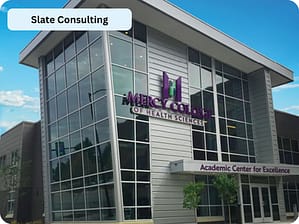
Slate Health Check: Mercy College

Slate Health Check: Mercy College MERCY COLLEGE OF HEALTH SCIENCES While Mercy College has successfully implemented Slate as its admissions and recruitment CRM, several key enrollment processes continue to rely on manual workflows, spreadsheets, paper-based tracking, and limited integration with Colleague. These operational dependencies have resulted in fragmented processes, duplicated data entry, and reduced visibility across the enrollment lifecycle, limiting the institution’s ability to fully leverage its Slate investment.  CHALLENGE: While Mercy College has successfully implemented Slate as its admissions and recruitment CRM, several key enrollment processes continue to rely on manual workflows, spreadsheets, paper-based tracking, and limited integration with Colleague. These operational dependencies have resulted in fragmented processes, duplicated data entry, and reduced visibility across the enrollment lifecycle, limiting the institution’s ability to fully leverage its Slate investment.  SOLUTION: To better understand these challenges and identify opportunities for improvement, Solidan conducted a comprehensive Slate Health Check focused on system configuration, operational workflows, and platform utilization. The engagement included stakeholder interviews, system analysis, and collaborative working sessions with Mercy’s internal Slate leadership team. Rather than focusing solely on technical configuration, the review emphasized how Slate was being used in practice, where manual processes persisted, and where staffing and integration constraints were impacting operational efficiency.  The Health Check revealed that while Mercy College has established a solid foundational use of Slate, there are significant opportunities to expand adoption and improve efficiency across several key areas. Key themes included process fragmentation driven by continued reliance on spreadsheets and manual tracking, underutilization of core Slate functionality such as automation, Reader, and Workflow tools, integration gaps between Slate and Colleague that contributed to duplicate data entry and limited visibility, and reporting constraints driven by manual data compilation and external tools. These findings highlighted both operational risk and significant opportunity to improve efficiency through deeper platform adoption.  Following the assessment, Solidan worked closely with Mercy College stakeholders to prioritize findings based on operational impact, implementation feasibility, and institutional capacity. This prioritization ensured focus on the highest-risk and highest-impact opportunities, particularly those related to reducing manual effort, improving workflow efficiency, and strengthening system integration. Staffing constraints were also considered throughout, resulting in recommendations designed to balance quick wins with longer-term optimization opportunities.  What began as a structured Health Check evolved into an ongoing support partnership, as Mercy College engaged Solidan to help translate findings into actionable improvements and phased implementation planning. This transition ensured the engagement moved beyond assessment into execution support, enabling continuous progress against the identified roadmap. Ongoing efforts have focused on expanding automation within admissions workflows, reducing reliance on manual and spreadsheet-based processes, improving Slate–Colleague alignment, and supporting staff adoption of underutilized Slate functionality.  “We could not be more pleased with the level of customer service and expertise we have received from Solidan. We look forward to continuing our collaboration to enhance our own team’s operations as well as the student experience!”  Katelyn Schmitt – Director of Enrollment Management RESULTS: The Health Check produced a detailed, module-based findings report covering areas such as Applications, Deliver, Events, Reader, and others. Each module included a structured evaluation of current-state usage, identified gaps, and prioritized recommendations designed to improve efficiency and reduce operational risk. More importantly, the findings provided Mercy College with a clear roadmap for decision-making and a foundation for strengthening its Slate environment in support of enrollment objectives.  Since the completion of the Health Check, Mercy College has already begun implementing early-phase improvements focused on workflow optimization and reduction of manual processing. These initial enhancements demonstrate early value from the recommendations and have helped reduce operational friction in key admissions processes, with additional improvements progressing through the ongoing support model.

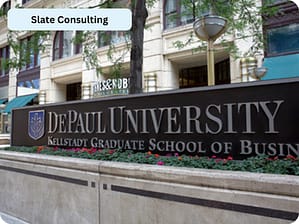
Depaul Communication Transformation: Leveraging Slate for Student Engagement

Depaul Communication Transformation: Leveraging Slate for Student Engagement DEPAUL’S KELLSTADT GRADUATE SCHOOL OF BUSINESS DePaul’s Kellstadt Graduate School of Business (KGSB) is the graduate business school of DePaul University in Chicago. It’s part of the Driehaus College of Business, one of the ten oldest business schools in the U.S., and is AACSB-accredited—an elite standard held by fewer than 5% of business schools worldwide. KGSB offers MBA and specialized master’s programs designed to develop practical business skills and leadership, with flexible formats including full-time, part-time, and online options. Its Chicago location and strong industry connections help students build professional networks and real-world experience. CHALLENGE: Previously, KGSB relied on a single population for all inquiries, which limited audience segmentation and the ability to deliver targeted, program-specific messaging. Campaigns required frequent manual updates, including regularly turning mailings on and off to adjust recipient lists, creating a high maintenance burden and increasing the risk of errors. Additionally, Slate Deliver functionality was not used in alignment with best practices, such as dynamic populations, standardized templates, and reusable content blocks, which constrained scalability and long-term sustainability. SOLUTION: Expand KGSB mailing campaigns by establishing one dedicated inquiry campaign per program to deliver more customized, major-specific content aligned with prospective students’ academic and career interests. This structure allows for clearer program differentiation and more precise audience segmentation, ensuring communications are relevant and reflective of each program’s unique value proposition. The approach leverages a scalable, modular campaign framework that incorporates shared templates, reusable content blocks, translation codes, and standardized logic. Together, these elements create a sustainable foundation that promotes consistency, reduces manual maintenance, and supports future program growth and evolving messaging needs. “The Solidan team was great to work with. We would solve problems in real time and when needed additional staffing, resources were added to the project. Overall, everything moved efficiently and we met our deadline.”  -Garry Cooke, Director of Recruitment and Admission Kellstadt Graduate School of Business DePaul University RESULTS: As a result, KGSB implemented a more streamlined and scalable campaign structure. This included the creation of program-specific inquiry campaigns paired with shared yield campaigns to balance personalization with efficiency. Translation codes were introduced to standardize program names, headers, and subject lines across communications, improving consistency and reducing maintenance. In addition, opportunities to improve campaign management processes and clarify staff assignments were identified, supporting more efficient ongoing operations.

UMass Canvas-to-PeopleSoft Grade Import Integration

UMass Canvas-to-PeopleSoft Grade Import Integration THE UNIVERSITY OF MASSACHUSETTS UNIVERSITY SYSTEM Solidan partnered with the University of Massachusetts System to implement a robust integration between Canvas (LMS) and PeopleSoft Campus Solutions, streamlining the import of midterm and final grades. The solution delivers dual-mode functionality, supporting both real-time API-based grade transfers and fallback file upload capabilities. CHALLENGE: The UMass system faced persistent challenges in efficiently transferring grades from Canvas into PeopleSoft. Faculty encountered limitations with self-service grade imports due to: Inconsistent system behavior Complex grading scenarios Limited integration capabilities Without real-time connectivity between Canvas and PeopleSoft, institutions relied on manual workarounds, which led to delays, errors, and added pressure during high-volume grading periods. Furthermore, administrative staff lacked a reliable method to intervene when faculty-facing tools failed—creating bottlenecks and putting grade data integrity at risk. SOLUTION: To resolve these issues, Solidan designed and delivered a dual-mode grade import solution that:  Seamlessly integrates Canvas with PeopleSoft Campus Solutions  Leverages Boomi middleware to enable real-time, API-based grade transfers  Incorporates a file upload fallback using PeopleSoft’s delivered grade import functionality  This flexible and resilient approach ensures faculty and administrators can successfully submit grades, even in complex or constrained scenarios.  Key Features Delivered:  API-Based Integration:  Real-time grade imports from Canvas to PeopleSoft using the Canvas API and Boomi middleware  Boomi Data Translation Layer:  Automated mapping and transformation of Canvas exports into PeopleSoft-ready formats  File Import Fallback:  Enables administrative users to upload grade files when API import is unavailable or inapplicable  Administrative Upload Support:  Staff can submit grades on behalf of faculty for exceptional cases or complex course setups  Two-Way Import Pathways:  Supports both self-service (faculty) and administrative-grade submission workflows  “Working with Solidan on this or any project is amazing. Solidan brings both technical and functional expertise that improved the deliverables as well as speeding up the time to completion.  Responsive, knowledgeable and quick – We couldn’t be more satisfied and we look forward to future projects.”  -Rebecca Forest, Applications Manager Campus Community, Admissions, Academics and Records Support, University of Massachusetts System KEY FEATURES DELIVERED: API-Based Integration: Real-time grade imports from Canvas to PeopleSoft using the Canvas API and Boomi middleware Boomi Data Translation Layer: Automated mapping and transformation of Canvas exports into PeopleSoft-ready formats File Import Fallback: Enables administrative users to upload grade files when API import is unavailable or inapplicable Administrative Upload Support: Staff can submit grades on behalf of faculty for exceptional cases or complex course setups Two-Way Import Pathways: Supports both self-service (faculty) and administrative-grade submission workflows RESULTS: With Solidan’s support, the UMass system now benefits from a scalable, efficient, and user-friendly solution for grade imports. The integration ensures academic deadlines are met while reducing manual workload and increasing confidence in data integrity. Streamlined the faculty experience through direct, self-service grade imports Ensured consistent grade processing via dual-mode (API and file) functionality Empowered administrative users to intervene when faculty access was limited Minimized grading delays during peak submission periods Improved data accuracy through Boomi-powered transformation and validation Increased user satisfaction and reduced support burden during midterm and final grade windows

Hutchinson Community College Slate Health Check

Hutchinson Community College Slate Health Check HUTCHINSON COMMUNITY COLLEGE Hutchinson Community College (HutchCC) is a public two-year institution located in Hutchinson, Kansas, offering more than 70 academic and 50 technical programs leading to associate degrees and certificates. Founded in 1928, the college serves a diverse student population and supports a vibrant campus life, including competitive NJCAA athletics CHALLENGE: Hutchinson Community College (HutchCC) recently implemented Slate to support a wide range of enrollment functions, from inquiry management and application review to event management and communications. While the initial setup was completed with support from another external vendor, ongoing management has been maintained by a single internal lead. Recognizing the limitations of this approach and the underutilization of Slate’s full capabilities, HutchCC engaged Solidan’s team of Slate experts to conduct a comprehensive system audit. The goal was to identify key risks, uncover gaps in usage, and provide strategic recommendations to help the college maximize the value of their investment in Slate while aligning with institutional goals and operational capacity. SOLUTION: To support Hutchinson Community College in maximizing the effectiveness of their Slate CRM investment, our team conducted a comprehensive system Health Check designed to evaluate both technical configuration and business process alignment. The approach combined two key strategies: a thorough back-end system review and a series of stakeholder interviews with Admissions staff to better understand current workflows, challenges, and goals. The assessment focused on identifying risks, inefficiencies, and areas of opportunity across core components of the Slate instance, including Applications, Reader & Workflows, Deliver/Communications, Events & Scheduler, Forms, Inbox, Imports/Exports, Rules & Automations, Queries/Reports, Permissions, and general database configuration. Each area was evaluated with attention to scalability, accuracy, usability, and alignment with institutional strategy. Our methodology involved four key phases:     1. Discovery & Interviews – Conducted targeted discussions with key Admissions stakeholders to map current-state processes and pain points.     2. System Analysis – Performed an in-depth review of HutchCC’s Slate configuration and usage, identifying redundancies, gaps, and potential risks.     3. Findings & Recommendations – Compiled a detailed set of findings highlighting strengths, underutilized features, and areas needing attention.     4. Prioritization & Roadmapping – Collaboratively identified priority areas based on institutional goals, resource constraints, and technical dependencies. Throughout the process, we partnered closely with HutchCC’s internal Slate lead, whose institutional knowledge was instrumental in guiding the evaluation. While limited staffing presented a challenge, it also shaped our focus toward sustainable, high-impact recommendations that could be executed with existing resources or scaled over time. Our Health Check not only delivered a clear snapshot of current-state usage but also laid the groundwork for data-informed decision-making, improved operational efficiency, and more strategic use of Slate going forward. “Collaborating with Solidan on our Slate instance has been a very positive and productive experience. The recent health check provided valuable insights that are already informing our next steps and helping us identify areas for improvement. Their team has been incredibly responsive, knowledgeable, and easy to work with. We are excited to continue building a more streamlined and efficient system with their support.”   -Brea Turner, MBA, Executive Director of Enrollment Management   -Bianca Kunzinger, CRM & Project Coordinator RESULTS: The Slate Health Check resulted in a comprehensive findings document, organized by module (e.g., Applications, Deliver, Events, Reader, etc.). Within each module, we provided a detailed, line-by-line assessment of key focus areas, identifying what was working well, where improvements maybe needed, and any areas of potential risk. For each item, Solidan included specific, recommendations along with suggested priority levels. HutchCC is now able to use the information from the Health Check alongside other identified initiatives to prioritize next steps and continue optimizing their Slate instance in support of their enrollment goals.

Send Us A Message