Slate Health Check: Mercy College
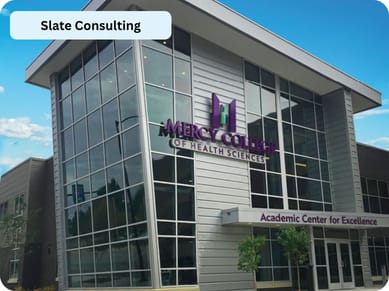
Slate Health Check: Mercy College MERCY COLLEGE OF HEALTH SCIENCES While Mercy College has successfully implemented Slate as its admissions and recruitment CRM, several key enrollment processes continue to rely on manual workflows, spreadsheets, paper-based tracking, and limited integration with Colleague. These operational dependencies have resulted in fragmented processes, duplicated data entry, and reduced visibility across the enrollment lifecycle, limiting the institution’s ability to fully leverage its Slate investment. CHALLENGE: While Mercy College has successfully implemented Slate as its admissions and recruitment CRM, several key enrollment processes continue to rely on manual workflows, spreadsheets, paper-based tracking, and limited integration with Colleague. These operational dependencies have resulted in fragmented processes, duplicated data entry, and reduced visibility across the enrollment lifecycle, limiting the institution’s ability to fully leverage its Slate investment. SOLUTION: To better understand these challenges and identify opportunities for improvement, Solidan conducted a comprehensive Slate Health Check focused on system configuration, operational workflows, and platform utilization. The engagement included stakeholder interviews, system analysis, and collaborative working sessions with Mercy’s internal Slate leadership team. Rather than focusing solely on technical configuration, the review emphasized how Slate was being used in practice, where manual processes persisted, and where staffing and integration constraints were impacting operational efficiency. The Health Check revealed that while Mercy College has established a solid foundational use of Slate, there are significant opportunities to expand adoption and improve efficiency across several key areas. Key themes included process fragmentation driven by continued reliance on spreadsheets and manual tracking, underutilization of core Slate functionality such as automation, Reader, and Workflow tools, integration gaps between Slate and Colleague that contributed to duplicate data entry and limited visibility, and reporting constraints driven by manual data compilation and external tools. These findings highlighted both operational risk and significant opportunity to improve efficiency through deeper platform adoption. Following the assessment, Solidan worked closely with Mercy College stakeholders to prioritize findings based on operational impact, implementation feasibility, and institutional capacity. This prioritization ensured focus on the highest-risk and highest-impact opportunities, particularly those related to reducing manual effort, improving workflow efficiency, and strengthening system integration. Staffing constraints were also considered throughout, resulting in recommendations designed to balance quick wins with longer-term optimization opportunities. What began as a structured Health Check evolved into an ongoing support partnership, as Mercy College engaged Solidan to help translate findings into actionable improvements and phased implementation planning. This transition ensured the engagement moved beyond assessment into execution support, enabling continuous progress against the identified roadmap. Ongoing efforts have focused on expanding automation within admissions workflows, reducing reliance on manual and spreadsheet-based processes, improving Slate–Colleague alignment, and supporting staff adoption of underutilized Slate functionality. “We could not be more pleased with the level of customer service and expertise we have received from Solidan. We look forward to continuing our collaboration to enhance our own team’s operations as well as the student experience!” Katelyn Schmitt – Director of Enrollment Management RESULTS: The Health Check produced a detailed, module-based findings report covering areas such as Applications, Deliver, Events, Reader, and others. Each module included a structured evaluation of current-state usage, identified gaps, and prioritized recommendations designed to improve efficiency and reduce operational risk. More importantly, the findings provided Mercy College with a clear roadmap for decision-making and a foundation for strengthening its Slate environment in support of enrollment objectives. Since the completion of the Health Check, Mercy College has already begun implementing early-phase improvements focused on workflow optimization and reduction of manual processing. These initial enhancements demonstrate early value from the recommendations and have helped reduce operational friction in key admissions processes, with additional improvements progressing through the ongoing support model.
Depaul Communication Transformation: Leveraging Slate for Student Engagement
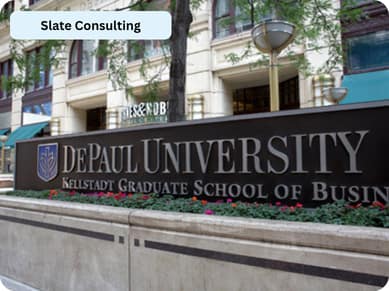
Depaul Communication Transformation: Leveraging Slate for Student Engagement DEPAUL’S KELLSTADT GRADUATE SCHOOL OF BUSINESS DePaul’s Kellstadt Graduate School of Business (KGSB) is the graduate business school of DePaul University in Chicago. It’s part of the Driehaus College of Business, one of the ten oldest business schools in the U.S., and is AACSB-accredited—an elite standard held by fewer than 5% of business schools worldwide. KGSB offers MBA and specialized master’s programs designed to develop practical business skills and leadership, with flexible formats including full-time, part-time, and online options. Its Chicago location and strong industry connections help students build professional networks and real-world experience. CHALLENGE: Previously, KGSB relied on a single population for all inquiries, which limited audience segmentation and the ability to deliver targeted, program-specific messaging. Campaigns required frequent manual updates, including regularly turning mailings on and off to adjust recipient lists, creating a high maintenance burden and increasing the risk of errors. Additionally, Slate Deliver functionality was not used in alignment with best practices, such as dynamic populations, standardized templates, and reusable content blocks, which constrained scalability and long-term sustainability. SOLUTION: Expand KGSB mailing campaigns by establishing one dedicated inquiry campaign per program to deliver more customized, major-specific content aligned with prospective students’ academic and career interests. This structure allows for clearer program differentiation and more precise audience segmentation, ensuring communications are relevant and reflective of each program’s unique value proposition. The approach leverages a scalable, modular campaign framework that incorporates shared templates, reusable content blocks, translation codes, and standardized logic. Together, these elements create a sustainable foundation that promotes consistency, reduces manual maintenance, and supports future program growth and evolving messaging needs. “The Solidan team was great to work with. We would solve problems in real time and when needed additional staffing, resources were added to the project. Overall, everything moved efficiently and we met our deadline.” -Garry Cooke, Director of Recruitment and Admission Kellstadt Graduate School of Business DePaul University RESULTS: As a result, KGSB implemented a more streamlined and scalable campaign structure. This included the creation of program-specific inquiry campaigns paired with shared yield campaigns to balance personalization with efficiency. Translation codes were introduced to standardize program names, headers, and subject lines across communications, improving consistency and reducing maintenance. In addition, opportunities to improve campaign management processes and clarify staff assignments were identified, supporting more efficient ongoing operations.
UMass Canvas-to-PeopleSoft Grade Import Integration

UMass Canvas-to-PeopleSoft Grade Import Integration THE UNIVERSITY OF MASSACHUSETTS UNIVERSITY SYSTEM Solidan partnered with the University of Massachusetts System to implement a robust integration between Canvas (LMS) and PeopleSoft Campus Solutions, streamlining the import of midterm and final grades. The solution delivers dual-mode functionality, supporting both real-time API-based grade transfers and fallback file upload capabilities. CHALLENGE: The UMass system faced persistent challenges in efficiently transferring grades from Canvas into PeopleSoft. Faculty encountered limitations with self-service grade imports due to: Inconsistent system behavior Complex grading scenarios Limited integration capabilities Without real-time connectivity between Canvas and PeopleSoft, institutions relied on manual workarounds, which led to delays, errors, and added pressure during high-volume grading periods. Furthermore, administrative staff lacked a reliable method to intervene when faculty-facing tools failed—creating bottlenecks and putting grade data integrity at risk. SOLUTION: To resolve these issues, Solidan designed and delivered a dual-mode grade import solution that: Seamlessly integrates Canvas with PeopleSoft Campus Solutions Leverages Boomi middleware to enable real-time, API-based grade transfers Incorporates a file upload fallback using PeopleSoft’s delivered grade import functionality This flexible and resilient approach ensures faculty and administrators can successfully submit grades, even in complex or constrained scenarios. Key Features Delivered: API-Based Integration: Real-time grade imports from Canvas to PeopleSoft using the Canvas API and Boomi middleware Boomi Data Translation Layer: Automated mapping and transformation of Canvas exports into PeopleSoft-ready formats File Import Fallback: Enables administrative users to upload grade files when API import is unavailable or inapplicable Administrative Upload Support: Staff can submit grades on behalf of faculty for exceptional cases or complex course setups Two-Way Import Pathways: Supports both self-service (faculty) and administrative-grade submission workflows “Working with Solidan on this or any project is amazing. Solidan brings both technical and functional expertise that improved the deliverables as well as speeding up the time to completion. Responsive, knowledgeable and quick – We couldn’t be more satisfied and we look forward to future projects.” -Rebecca Forest, Applications Manager Campus Community, Admissions, Academics and Records Support, University of Massachusetts System KEY FEATURES DELIVERED: API-Based Integration: Real-time grade imports from Canvas to PeopleSoft using the Canvas API and Boomi middleware Boomi Data Translation Layer: Automated mapping and transformation of Canvas exports into PeopleSoft-ready formats File Import Fallback: Enables administrative users to upload grade files when API import is unavailable or inapplicable Administrative Upload Support: Staff can submit grades on behalf of faculty for exceptional cases or complex course setups Two-Way Import Pathways: Supports both self-service (faculty) and administrative-grade submission workflows RESULTS: With Solidan’s support, the UMass system now benefits from a scalable, efficient, and user-friendly solution for grade imports. The integration ensures academic deadlines are met while reducing manual workload and increasing confidence in data integrity. Streamlined the faculty experience through direct, self-service grade imports Ensured consistent grade processing via dual-mode (API and file) functionality Empowered administrative users to intervene when faculty access was limited Minimized grading delays during peak submission periods Improved data accuracy through Boomi-powered transformation and validation Increased user satisfaction and reduced support burden during midterm and final grade windows
Hutchinson Community College Slate Health Check

Hutchinson Community College Slate Health Check HUTCHINSON COMMUNITY COLLEGE Hutchinson Community College (HutchCC) is a public two-year institution located in Hutchinson, Kansas, offering more than 70 academic and 50 technical programs leading to associate degrees and certificates. Founded in 1928, the college serves a diverse student population and supports a vibrant campus life, including competitive NJCAA athletics CHALLENGE: Hutchinson Community College (HutchCC) recently implemented Slate to support a wide range of enrollment functions, from inquiry management and application review to event management and communications. While the initial setup was completed with support from another external vendor, ongoing management has been maintained by a single internal lead. Recognizing the limitations of this approach and the underutilization of Slate’s full capabilities, HutchCC engaged Solidan’s team of Slate experts to conduct a comprehensive system audit. The goal was to identify key risks, uncover gaps in usage, and provide strategic recommendations to help the college maximize the value of their investment in Slate while aligning with institutional goals and operational capacity. SOLUTION: To support Hutchinson Community College in maximizing the effectiveness of their Slate CRM investment, our team conducted a comprehensive system Health Check designed to evaluate both technical configuration and business process alignment. The approach combined two key strategies: a thorough back-end system review and a series of stakeholder interviews with Admissions staff to better understand current workflows, challenges, and goals. The assessment focused on identifying risks, inefficiencies, and areas of opportunity across core components of the Slate instance, including Applications, Reader & Workflows, Deliver/Communications, Events & Scheduler, Forms, Inbox, Imports/Exports, Rules & Automations, Queries/Reports, Permissions, and general database configuration. Each area was evaluated with attention to scalability, accuracy, usability, and alignment with institutional strategy. Our methodology involved four key phases: 1. Discovery & Interviews – Conducted targeted discussions with key Admissions stakeholders to map current-state processes and pain points. 2. System Analysis – Performed an in-depth review of HutchCC’s Slate configuration and usage, identifying redundancies, gaps, and potential risks. 3. Findings & Recommendations – Compiled a detailed set of findings highlighting strengths, underutilized features, and areas needing attention. 4. Prioritization & Roadmapping – Collaboratively identified priority areas based on institutional goals, resource constraints, and technical dependencies. Throughout the process, we partnered closely with HutchCC’s internal Slate lead, whose institutional knowledge was instrumental in guiding the evaluation. While limited staffing presented a challenge, it also shaped our focus toward sustainable, high-impact recommendations that could be executed with existing resources or scaled over time. Our Health Check not only delivered a clear snapshot of current-state usage but also laid the groundwork for data-informed decision-making, improved operational efficiency, and more strategic use of Slate going forward. “Collaborating with Solidan on our Slate instance has been a very positive and productive experience. The recent health check provided valuable insights that are already informing our next steps and helping us identify areas for improvement. Their team has been incredibly responsive, knowledgeable, and easy to work with. We are excited to continue building a more streamlined and efficient system with their support.” -Brea Turner, MBA, Executive Director of Enrollment Management -Bianca Kunzinger, CRM & Project Coordinator RESULTS: The Slate Health Check resulted in a comprehensive findings document, organized by module (e.g., Applications, Deliver, Events, Reader, etc.). Within each module, we provided a detailed, line-by-line assessment of key focus areas, identifying what was working well, where improvements maybe needed, and any areas of potential risk. For each item, Solidan included specific, recommendations along with suggested priority levels. HutchCC is now able to use the information from the Health Check alongside other identified initiatives to prioritize next steps and continue optimizing their Slate instance in support of their enrollment goals.
ICC Admissions Implementation
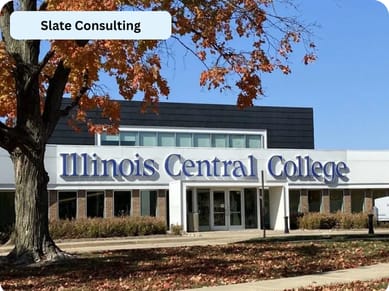
ICC Admissions Implementation ILLINOIS CENTRAL COLLEGE Illinois Central College (ICC), a comprehensive community college in Illinois, offers a diverse array of academic and workforce training programs. These include associate degree programs, dual enrollment opportunities for high school students, GED and ESL courses, non-credit classes, and the nation’s first prison education program. In an effort to modernize and simplify its student application process, ICC embarked on a digital transformation project to replace its legacy system, TargetX, and streamline how prospective students apply and interact with the college. The goal was to implement a single, centralized application experience using Slate as the new CRM platform. CHALLENGE: 1. Urgent Need for a CRM Replacement: Facing the expiration of its TargetX contract, ICC was under pressure to rapidly identify and implement a new CRM solution that could support core operations without disrupting recruitment or enrollment cycles. 2. Complex Enrollment Structures: ICC required a flexible system capable of supporting both open-access enrollment pathways common to community colleges and more structured processes for selective admission programs 3. Fragmented Application Systems: The absence of a centralized application platform—where records were initiated in PeopleSoft and later transitioned to TargetX—led to data fragmentation, staff inefficiencies, and a disjointed applicant experience. 4. Communication Gaps: The team identified inequities between various applicant groups and the frequency of communications they were receiving. 5. Planning for Future Integration: In anticipation of a future Student Information System (SIS) implementation, ICC required a CRM that was not only scalable, but also capable of integrating seamlessly with evolving technical infrastructure. SOLUTION: Solidan partnered with ICC with one goal: to create a centralized, future-ready application and enrollment management system. Solidan achieved this by: 1. Implementing a unified application in Slate, enabling students to apply once and simplifies the process for future program pursuits. 2. Developing a custom application starter page and application management portal that guides applicants through tailored pathways based on student type, improving usability and accuracy. Only brand-new application records could successfully complete the Slate application. Returning students identified through the account creation process are instead provided with instructions for account reactivation through their Support Hub, avoiding record duplication in Slate. 3. Developing an application fraud review process: Developed a custom workflow that allowed the verification of applications and allowed for the identification and flagging of fraudulent applications by the institutions Registrar’s team. Only approved records are pushed through for admissions to the SIS. 4. Enhancing communications through the implementation of Slate Inbox, creation of drip marketing campaigns, and automating application status notifications. 5. Creating bidirectional feeds between Slate and Peoplesoft via a FileParser integration to seamlessly send application data to PeopleSoft, mimicking prior requirements and ensuring continuity. 6. Historical application data was imported, and enrollment history tracking was introduced through custom integration feeds and an enrollment history tab. 7. Active & completed enrollment information “Solidan provided the Slate and PeopleSoft expertise to allow ICC to transform the student experience, recruitment, admissions, and data visualizations. Their team’s commitment and hard work have truly made a difference.” Gabe Gibson Chief Information Officer, Illinois Central College RESULTS: · The ICC One App is now live, with data flowing to PeopleSoft and return files successfully reintegrating into Slate.· Students now experience a centralized, user-friendly application process with better guidance and fewer redundancies. · Fraudulent applications are reduced due to a new fraud validation workflow. · ICC gained a clear view of enrollment history through enhanced data structure and status tracking. · Communication with canceled applicants was restored, addressing a long-standing gap in the process. · The solution lays the groundwork for a smooth transition from PeopleSoft to Workday, aligning with ICC’s long-term technology goals. The project demonstrates the value of strategic planning and collaboration in transforming complex enrollment systems into streamlined, student-centric experiences.
University Plus Application Streamlining Project
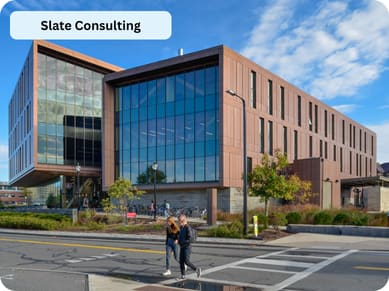
University Plus Application Streamlining Project The University of Massachusetts Amherst The University of Massachusetts Amherst (UMass Amherst) is a major public research university and the flagship campus of the UMass system. UMass Amherst needed a modern, efficient solution to streamline the application process for its online program offerings. To address this need, UMass Amherst partnered with Solidan to implement a single application solution through Slate. This solution needed to align the application experience with the Slate-supported undergraduate and graduate processes that had already been established. CHALLENGE: UMass Amherst faced several challenges: Overall, the admissions process was fragmented and relied heavily on manual processing which created room for human error, complicated application management and review workflows, and greatly increased administrative burden. Staff were required to work across multiple disparate systems to get their job done, resulting in operational inefficiencies. Applications and materials were printed and kept in paper folders, which made it difficult to share the information with other departments involved in the process. The applicant portal was difficult to navigate and lacked the information that online applicants needed, leading to applicant frustration and confusion. All changes to the application required outside intervention resulting in delayed updates and requiring workarounds to be established. These challenges posed significant obstacles to UMass Amherst’s ability to offer a smooth, streamlined, and user-friendly application experience. It also hindered administrative efficiency and data integrity, prompting a need for strategic intervention. SOLUTION: Solidan aided UMass Amherst with one goal: to create a unified, Slate-hosted application platform that simplifies and guides the applicant’s journey from start to finish while streamlining the administrative process. Solidan achieved it by: Developing a single point-of-entry Slate application that intelligently routes applicants based on eligibility and program selection. Implementing an application management and status portal to reduce confusion and increase transparency throughout the application lifecycle. Constructing an Application Review Workflow that leveraged automation to move records along through the process more accurately and efficiently. Building integrations with Peoplesoft and Salesforce, allowing seamless transitions of applicant data in multiple systems. To implement the solution, Solidan worked closely with UMass Amherst stakeholders to understand their unique needs and application workflows. Key guiding principles included reducing data entry, eliminating duplicate records, minimizing customization to ensure sustainability, and maintaining flexibility for future enhancements. Notable features: An eligibility-based “application starter” form that prevents submission if an applicant is not qualified for the selected program. Logic that allows multiple applications (for different programs) per term while enforcing record consolidation and preventing duplicate entries. A centralized applicant portal that enhanced the user experience allowing applicants to track the status of their application, missing materials, and receive custom transfer credit evaluations. RESULTS: The implementation resulted in a cohesive, user-friendly, and scalable application platform for UMass Amherst’s online programs. Key outcomes: Operational Efficiency: Reduced administrative burden through centralized dashboards and streamlined workflows. Improved Applicant Experience: Clearer application pathways and real-time status tracking enhanced user satisfaction and reduced errors in program selection. Data Integrity: Improved processes around duplicate prevention and record consolidation ensured cleaner student data. Sustainability: Minimal customization preserved long-term maintainability and reduced dependency on IT for ongoing support. This project demonstrates how a thoughtful, systems-based approach can address complex challenges in higher education operations while enhancing both staff efficiency and the applicant experience. “Working with Solidan was such a positive experience – I can’t say that enough. Their knowledge of the admissions world allowed them to guide us through the process – asking the right questions and striving to find solutions for complicated issues. They were supportive from beginning to end and beyond. We could not have achieved the level of success that we did without them.” Susan Slocombe Manager, Student Services Systems UMass Amherst, Flexible Education CLIENT’S FEEDBACK: “We were in desperate need of an overhaul of our online application and admissions processes. The solution had to, first and foremost, serve our applicants in the best way possible while providing the efficiencies that we needed. Partnering with Solidan allowed us to achieve exactly that. What we ended up with is a comprehensive application that is easy to complete and easily modified to accommodate necessary changes, a functional portal that allows applicants to upload materials as well as track the progress of their application and a vast improvement in our administrative efficiencies. Working with Solidan was such a positive experience – I can’t say that enough. Their knowledge of the admissions world allowed them to guide us through the process – asking the right questions and striving to find solutions for complicated issues. They were supportive from beginning to end and beyond. We could not have achieved the level of success that we did without them.”
UMass PeopleSoft/Slate Student Success Implementation

UMass Dartmouth PeopleSoft/Slate Student Success Implementation The University of Massachusetts Dartmouth UMass Dartmouth is a public research university in Dartmouth, Massachusetts, and part of the University of Massachusetts system. Known for its focus on experiential learning, research, and community engagement, the university offers a wide range of undergraduate and graduate programs. It serves a diverse student population and partners with local schools and industries to support regional development. CHALLENGE: UMass Dartmouth faced the need to centralize and improve student support services to enhance engagement, retention, and academic success. Prior to implementing Slate Student Success, communication with students was likely fragmented, advising appointments were difficult to manage at scale, and there was limited visibility into student progress. The university also lacked the tools for personalized outreach and early intervention for at-risk students. These challenges hindered the ability to deliver proactive, data-informed support and collaboration across departments. SOLUTION: UMass Dartmouth, with Solidan’s guidance, implemented Slate Student Success to centralize student support and streamline key services. The solution included configuring tools for managing advising appointments, tracking academic progress, enabling targeted outreach, and facilitating communication between students, advisors, and faculty. Here’s how Solidan made it happen: Solidan partnered closely with UMass Dartmouth to ensure a successful implementation of Slate Student Success, aligning the project with institutional goals around student engagement, retention, and proactive support. Here’s how: 1. Strategic Planning and Configuration Solidan guided UMass Dartmouth through the full implementation lifecycle—starting with discovery and planning to understand institutional workflows, advising structures, and communication needs. Solidan then configured Slate to support these processes, including centralized messaging, appointment scheduling, and progress tracking. 2. Data Integration and Predictive Modeling Solidan supported the integration of student data sources into Slate and helped define key indicators for success and risk. By leveraging Slate’s analytics and predictive modeling tools, the team enabled UMass Dartmouth to identify at-risk students early and act with timely, personalized interventions. 3. Training and Collaboration Enablement Solidan led training sessions for advisors, faculty, and staff to ensure confident adoption and use of the platform. This included developing best practices for using Slate’s tools to improve collaboration between departments, personalize outreach, and strengthen student support networks. 4. Ongoing Support and Optimization Post-launch, Solidan remained engaged to refine workflows, monitor effectiveness, and optimize usage based on campus feedback and evolving student needs—ensuring that Slate remained a dynamic and responsive platform for student success. Result: Increased Efficiency and Reduced Manual Labor: The implementation of DPK and Ansible drastically reduced the amount of manual labor required to manage PeopleSoft Campus Solutions. Routine updates, patches, and environment configurations were automated, allowing the client’s IT team to focus on higher-value tasks. Consistency Across Environments: Automation ensured uniformity across development, testing, and production environments, eliminating configuration drift and reducing operational issues caused by inconsistencies. Faster System Updates and Deployments: The use of DPK and Ansible enabled faster rollout of updates and system changes, reducing downtime and improving the speed at which new features and patches were deployed. Improved Security and Compliance: Automated security protocols ensured that the system adhered to strict data privacy standards, while reducing the risk of human error in manual processes. Regular security updates were automated, ensuring continuous compliance with regulatory requirements. Scalability for Future Growth: The automation framework provided by Solidan allowed the client to easily scale its PeopleSoft Campus Solutions environment as its needs grew. Ansible’s flexibility ensured that new environments could be rapidly provisioned without additional manual effort. “Solidan’s expertise with PeopleSoft and Slate makes them a great partner for us in developing fully integrated solutions between both systems for Admissions and Student Success.” Holger Dippel CIO / Associate Vice Chancellor for Computer & Information Technology University of Massachusetts Dartmouth Conclusion: The implementation of Slate Student Success at UMass Dartmouth—supported by Solidan—resulted in a centralized, data-driven approach to student engagement and support. Advisors and faculty now have streamlined tools for managing communication, tracking student progress, and proactively intervening with at-risk students. The university has seen improved collaboration across departments, increased efficiency in student services, and stronger connections between students and support staff. With enhanced visibility into student needs and outcomes, UMass Dartmouth is better equipped to drive retention, foster academic achievement, and scale student success initiatives effectively.
UMass PeopleSoft/Slate Quick Admit

UMass PeopleSoft/Slate Quick Admit The University of Massachusetts Office of the President The University of Massachusetts (UMass) system—comprising campuses in Amherst, Boston, Dartmouth, Lowell, and the Medical School in Worcester—leverages technology to drive academic success and operational efficiency. UMass uses enterprise systems like PeopleSoft for student, HR, and finance management, Slate for admissions, and Blackboard/Moodle for learning management. These tools support streamlined processes, secure data handling, and enhanced student experiences. UMass also offers dual enrollment programs across its campuses, allowing high school students to earn college credit. At UMass Dartmouth, the Commonwealth Collegiate Academy (CCA) and Commonwealth Dual Enrollment Partnership (CDEP) provide opportunities for juniors and seniors—especially from schools like Brockton, New Bedford, and Taunton—to complete transferable college courses while still in high school. CHALLENGE: Students participating in the dual enrollment program at UMass Dartmouth faced an outdated and inefficient application process. The existing workflow using PeopleSoft’s delivered Quick Admit feature required manual data entry from Slate, making the process time-consuming and prone to errors. Without integration: Staff had to manually re-enter student data from Slate into PeopleSoft. This caused delays in enrolling high school students into college-level courses. The manual process increased the risk of data entry errors and miscommunications, especially during peak periods. These inefficiencies hindered operational effectiveness and strained partnerships with local high schools, ultimately impacting the student experience. SOLUTION: Solidan quickly assembled a dedicated team to integrate Slate with PeopleSoft for UMass Dartmouth’s Dual Enrollment Program, focusing on students from Dartmouth High School and the CCA population. The objective was clear: automate the transfer of student application data from Slate to PeopleSoft’s Quick Admit process—eliminating manual steps and improving enrollment speed and accuracy for high school students entering college-level courses. Here’s how Solidan made it happen: Application Process Automation Students initiate the process by completing a Slate form, which collects all required enrollment data. The form is routed to a parent/guardian for consent and additional information. It then proceeds to the high school counselor for review and approval. Once approved, UMass Dartmouth staff perform a final review, with the ability to edit data if needed, and mark the form as ready for import into PeopleSoft. Seamless Data Transfer and Processing A scheduled PeopleSoft Application Engine (AE) retrieves approved form data from Slate via an API call triggered by a Slate query. The data is written to a staging table in PeopleSoft, allowing for controlled processing. The AE then processes the staging data to create a student record using PeopleSoft’s Quick Admit functionality. Error Handling and Data Validation Built-in validation checks during data transfer and processing ensure all required fields are present and accurate. If errors are found (e.g., missing or invalid data), records are flagged for manual review. UMass Dartmouth staff can correct these issues before final record creation, ensuring high data integrity and minimizing delays. “Solidan’s expertise in automating our non-degree quick admit process has been transformative. By integrating Slate and PeopleSoft, they’ve streamlined our admissions workflow, significantly reducing manual data entry and minimizing errors. The process is now efficient and user-friendly, allowing our team to focus on student support rather than administrative tasks. Solidan’s solution has not only saved us time and resources but also enhanced the accuracy and consistency of our student records. We’re thrilled with the results and highly recommend their services.” Susan McHugh Director, Student Technology Operations Result: With Solidan’s support, UMass Dartmouth achieved a smooth and effective integration between Slate and PeopleSoft, delivering immediate and measurable benefits: Seamless Data Flow Automated data transfer from Slate to PeopleSoft eliminated manual entry, significantly accelerating processing times. Multi-Step Application Review The process now includes structured checkpoints for students, parents, counselors, and university staff—ensuring complete, accurate, and approved applications. Error Handling & Data Integrity Built-in validation and error-handling ensure that only clean, complete data is imported into PeopleSoft, minimizing discrepancies and rework. Efficient Enrollment The integration enables faster student onboarding, allowing high school students to begin their college-level courses without administrative delays. Streamlined Dual Enrollment Management UMass Dartmouth can now efficiently manage its growing dual enrollment program, supporting student success while maintaining data standards.
Preparing for 2025: Trends and Strategies in Higher Education Technology

As we move into 2025, higher education institutions face unique technology-driven opportunities and challenges, particularly around student engagement, administrative efficiencies, and staffing concerns. Here’s a closer look at the trends to watch:1. AI-Driven Student Engagement and SupportArtificial intelligence (AI) is poised to reshape how universities connect with students, from chatbots that answer queries in real-time to advanced learning analytics that personalize education. Implementing AI-driven tools within systems like Slate and PeopleSoft can enhance engagement by offering tailored communication and support based on student profiles, enrollment history, and engagement data.2. Enhanced Analytics in Student AdministrationWith growing data on student performance, engagement, and satisfaction, higher education institutions can harness analytics to drive better administrative decision-making. PeopleSoft and Slate offer valuable tools for managing this data, enabling universities to identify at-risk students earlier, optimize course offerings, and improve resource allocation. Moving forward, institutions that invest in integrating analytics across departments will see improvements in student retention and satisfaction.3. Adapting to Policy and Data Management ShiftsHigher education policies are continuously evolving, especially concerning data privacy and digital learning standards. Institutions must prepare for compliance with new data privacy regulations, as well as integrate security into every layer of student data management. Aligning with these policies, systems like PeopleSoft and Slate should be configured to secure student information, ensuring a balance between accessibility and compliance.4. Tackling Workforce Challenges in Higher Ed IT and Enrollment ManagementStaffing remains a critical issue in higher education, particularly within IT and enrollment management teams. The increased complexity of systems like Slate and PeopleSoft requires skilled professionals. Addressing this, institutions may explore training initiatives, invest in upskilling current employees, or leverage remote staffing solutions to broaden the talent pool.5. Future-Proofing Through Strategic Technology InvestmentsTo remain competitive, institutions should prioritize investments in flexible, scalable technologies. Enhancements like mobile-friendly portals, automated enrollment solutions, and personalized student portals will be essential for improving the student experience and adapting to changing enrollment trends.ConclusionNavigating these shifts requires proactive planning and a commitment to technology investment. By leveraging tools like Slate and PeopleSoft alongside emerging trends in AI and analytics, institutions can improve both student experiences and operational efficiencies in the coming year. Preparing now will help higher education institutions stay resilient and forward-thinking in 2025 and beyond.
Optimizing Higher Education IT Infrastructure for a Seamless Fall Semester: Strategies and Best Practices

As the fall semester approaches, higher education institutions face the critical task of ensuring their IT infrastructure is robust and ready to support the influx of students and faculty. The stakes are high—students expect seamless access to online resources, while faculty rely on dependable systems to deliver quality education. Below, we explore key strategies and best practices to optimize your IT infrastructure for the upcoming academic year. 1. Assessing Current IT Infrastructure Before diving into upgrades or new implementations, it’s crucial to conduct a thorough assessment of your current IT infrastructure. Identify areas of potential risk, such as outdated hardware, limited bandwidth, or insufficient cybersecurity measures. This proactive approach allows institutions to address vulnerabilities before they become critical issues during peak usage times. 2. Enhancing Network Security With cyber threats on the rise, particularly in the education sector, reinforcing network security should be a top priority. Implementing multi-factor authentication (MFA), regular security audits, and employee training on cybersecurity best practices are essential steps. Institutions can also benefit from leveraging AI-driven security tools to detect and respond to threats in real-time. 3. Scaling IT Resources with Cloud Solutions Cloud technology offers a scalable solution for managing the increased demand on IT systems during the academic year. By moving critical applications and data to the cloud, institutions can ensure high availability and reliability. This also provides flexibility in scaling resources up or down based on real-time needs, ensuring uninterrupted service for both students and faculty. 4. Ensuring Data Protection and Privacy With the increasing reliance on digital platforms, safeguarding student and staff data is more important than ever. Institutions should prioritize compliance with data protection regulations, such as GDPR or FERPA, and invest in encryption technologies to protect sensitive information. Regular data backups and disaster recovery plans are also critical components of a robust IT strategy. 5. Supporting Remote and Hybrid Learning As hybrid learning continues to be a prevalent model, IT infrastructure must be optimized to support seamless transitions between in-person and online learning. This includes ensuring that learning management systems (LMS) are fully integrated, and that all students have equitable access to the necessary technology and resources. 6. Leveraging Analytics for Decision-Making Data-driven decision-making is increasingly important in higher education. Institutions can use analytics to monitor system performance, track student engagement, and identify areas where IT resources can be optimized. Predictive analytics can also play a role in anticipating and mitigating potential issues before they impact the user experience. 7. Collaboration and Training Effective IT management requires collaboration across departments. Engaging faculty and staff in training sessions on new systems and best practices ensures that everyone is prepared for the technological demands of the academic year. This also fosters a culture of continuous improvement and innovation within the institution. By focusing on these strategies, higher education institutions can create a resilient IT infrastructure that not only meets the demands of the fall semester but also supports long-term success in a rapidly evolving educational landscape. For more insights on optimizing your institution’s IT infrastructure, learn more about Solidan’s consulting services and how we can help your institution achieve seamless operational efficiency this fall.